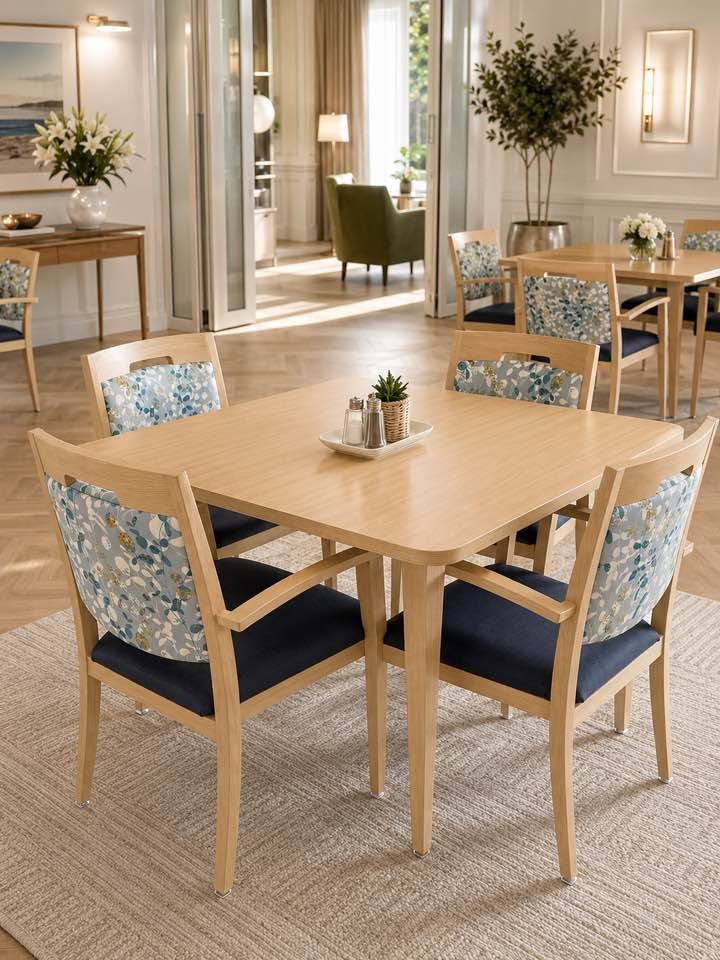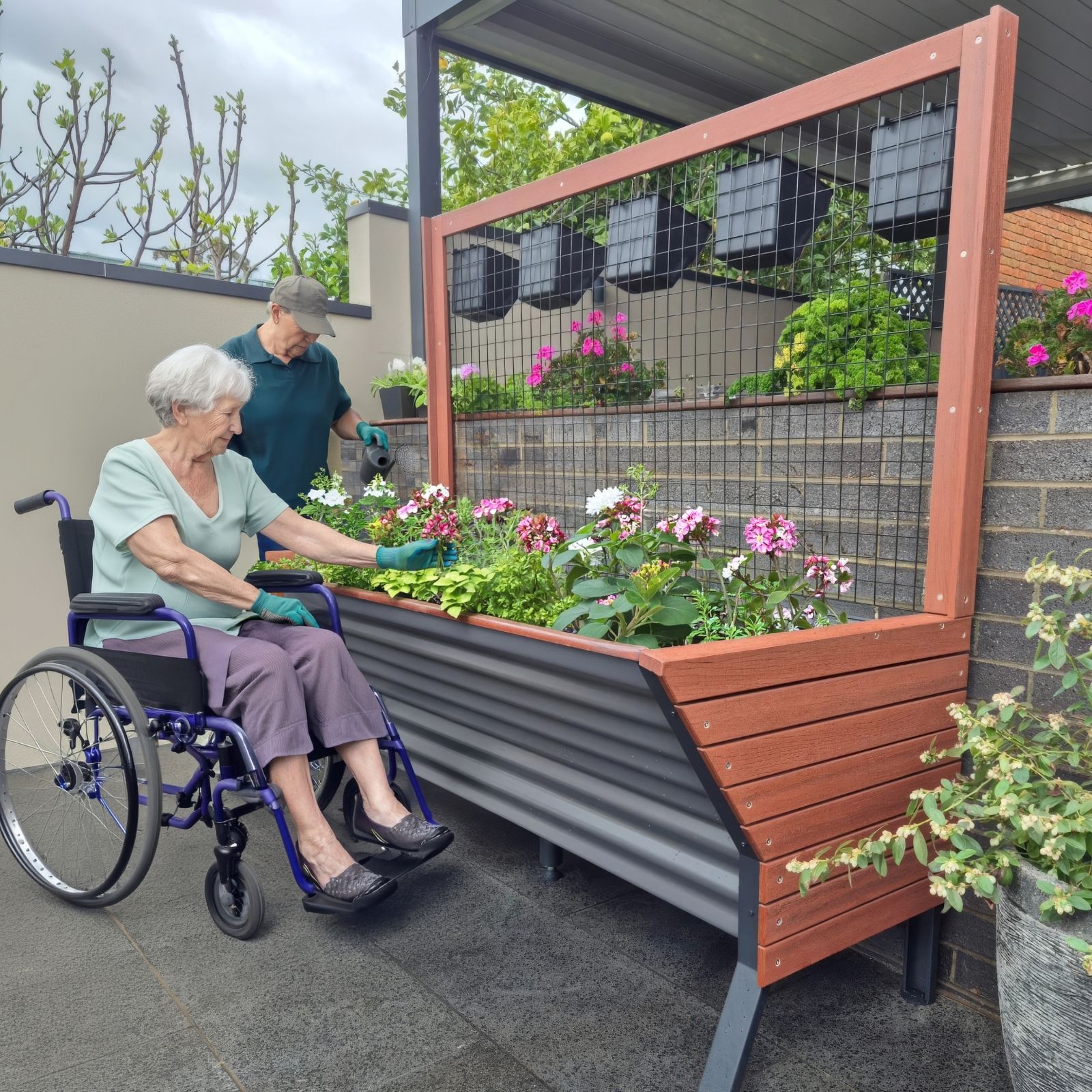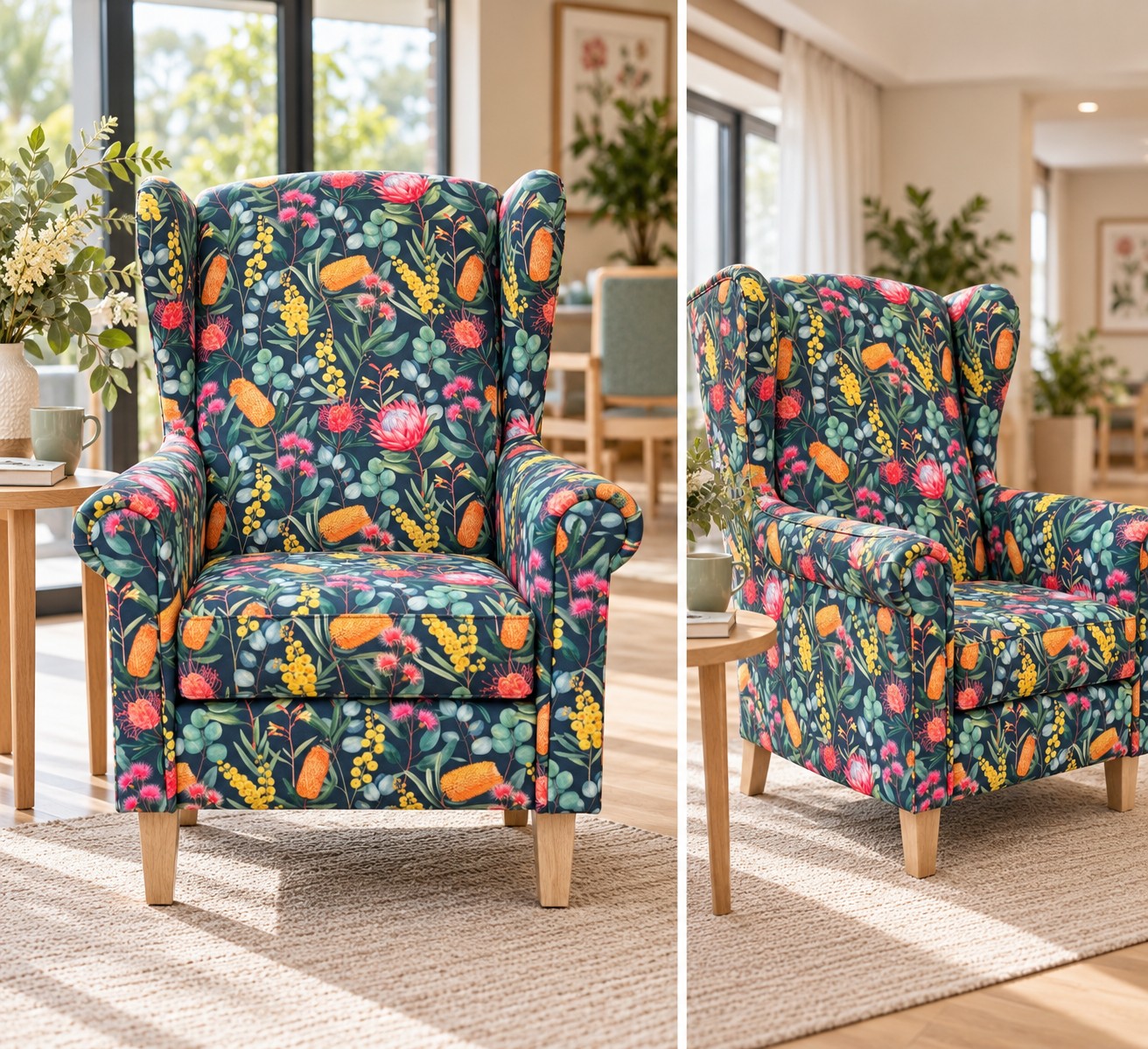


Dining is one of the most important daily activities for older adults — not just for nutrition, but for independence, dignity and social connection. Whether you’re furnishing an aged care facility or choosing a chair for an elderly parent at home, two features make the biggest difference to whether someone can sit, stand and eat safely: chair height and arms. Both are easy to overlook, and both matter.

The height of a dining chair directly affects a person’s comfort, safety and ability to sit and stand on their own.
If a chair is too low, the knees end up higher than the hips, which strains the hips and knees and makes standing harder and riskier. If a chair is too high, the feet don’t sit flat on the floor, causing instability and discomfort during meals.
The ideal dining chair height lets a person:
In practice this usually means a seat height around 480–520 mm — a little higher than a standard dining chair. At the correct height, older adults can sit and stand with less effort, which preserves independence and reduces reliance on help. It also supports good posture during meals, which matters for anyone with swallowing difficulties or reduced mobility.
Armless chairs are common in cafes and hospitality settings, but they’re often unsuitable for people with reduced strength, balance or mobility. Arms do several important jobs:
Arms give a stable surface to push off when standing and to steady against when sitting down. This reduces strain on the legs and helps prevent falls — a common concern as muscle strength and balance decline with age. For people with arthritis, reduced strength or balance issues, it makes a real difference.
Arms help maintain balance while seated, giving a point of support for those with reduced trunk strength or neurological conditions.
Meals are often social and can run long. Armrests give the arms somewhere to rest, reducing strain on the shoulders and neck and helping people stay comfortable throughout the meal.
Perhaps most importantly, arms let many people sit and stand without assistance — supporting dignity and self-esteem, and easing the physical demands on carers.
Arms help guide a person into the correct seating position and make the chair easier and safer to move, for residents and carers alike — especially helpful for those with mobility or cognitive impairments.
Getting dining chair height and arms right is a simple, effective way to improve safety, comfort and independence for older people — whether in an aged care facility or at home. When the right chairs are chosen, mealtimes become easier and more enjoyable for the person, and safer and more efficient for anyone helping them. These chairs are more than a seating choice; they’re a practical investment in wellbeing and in one of the most important social moments of the day.
See our full range of aged care dining chairs with arms: aged care dining chairs with arms. Or browse all aged care dining furniture: aged care dining furniture. To discuss the right chairs for your facility or home, call 03 9408 9710 or email info@wentworthcare.com.au.
Armrests provide support for safe sitting and standing, improve stability, reduce the risk of falls, and help older adults stay independent at mealtimes.
Around 480–520 mm — slightly higher than a standard dining chair. At this height the feet sit flat on the floor with the hips level with or above the knees, making it much easier and safer to stand. Many standard dining chairs are too low.
Correct seat height (480–520 mm), strong arms that clear the table, a stable anti-tilt frame, skid-resistant glides, rounded edges, and easy-clean healthcare-grade upholstery.
Yes. Arms support safe sit-to-stand and help guide the person into the seat. For dementia settings, also look for stable frames, rounded edges and low-glare, easy-clean fabrics.
They can, as long as the arms are designed to clear the table apron. This lets the person sit close to the table for a safer eating posture, with less spillage and effort.

© 2026 Wentworth Care Furniture | Website by Bsharptech