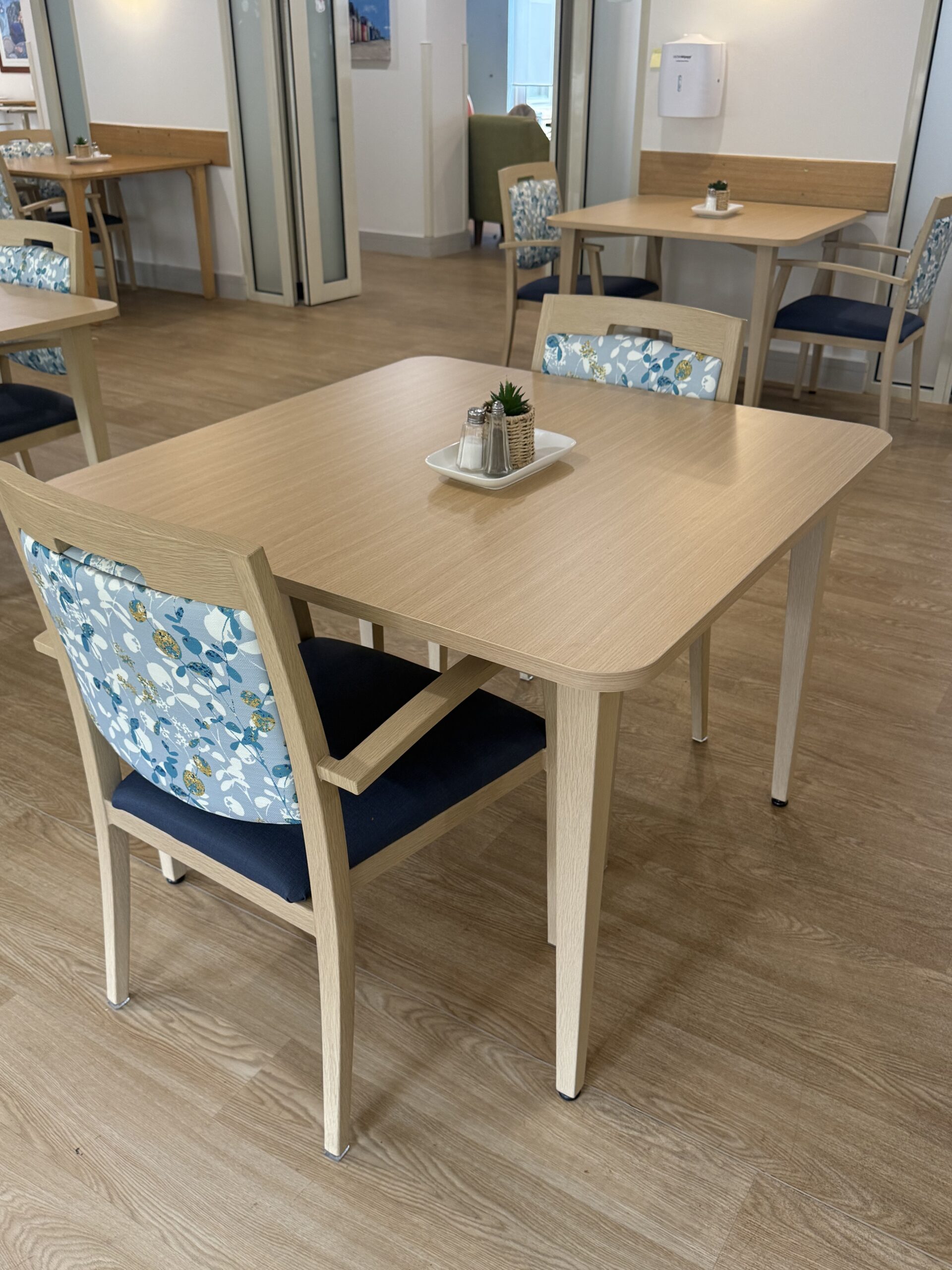

Dining is one of the most important daily activities in aged care. It is not only about nutrition but also about independence, dignity, and social connection. The design of dining chairs plays a significant role in ensuring residents can sit comfortably, stand safely, and participate confidently in mealtimes. Two critical features that are often overlooked are chair height and the presence of arms.
In aged care settings, the height of a dining chair directly affects a resident’s comfort, safety, and ability to sit and stand independently.
If a chair is too low, residents may struggle to stand up because their knees are positioned higher than their hips. This places additional strain on the hips and knees and increases the risk of falls when attempting to rise from the chair. Conversely, if a chair is too high, residents may find their feet do not sit firmly on the floor, which can cause instability and discomfort during meals.
The ideal dining chair height allows a resident to:
Sit with their feet flat on the floor
Maintain a 90-degree angle at the knees and hips
Sit comfortably at the correct height relative to the dining table
When chairs are at the correct height, residents are able to sit and stand with less effort, helping maintain independence and reducing reliance on staff assistance.
Correct seating height also supports good posture during meals, which is particularly important for residents who may experience swallowing difficulties or reduced mobility.
Arms on dining chairs provide essential support for many aged care residents. While armless chairs may be common in hospitality environments, they are often unsuitable for people with reduced strength, balance, or mobility.
Chair arms serve several important functions:
One of the primary benefits of arms is that they provide a stable surface for residents to push off when standing up or to steady themselves when sitting down. This reduces strain on the legs and helps prevent falls.
For residents with arthritis, reduced muscle strength, or balance issues, this additional support can make a significant difference in their ability to move safely and independently.
Arms also help residents maintain balance while seated. For individuals with reduced trunk strength or neurological conditions, armrests provide a point of support that helps them feel more secure.
Dining in aged care is often a social activity that can last for extended periods. Armrests provide a comfortable place to rest the arms, reducing fatigue and helping residents remain seated comfortably throughout the meal.
Perhaps most importantly, chairs with arms enable many residents to sit and stand without assistance, supporting independence and dignity. This can also reduce the physical demands placed on care staff who assist residents during mealtimes.
Choosing appropriate dining furniture is an important part of creating safe and welcoming environments in aged care. Chairs that are designed specifically for older people typically include:
A slightly higher seat height to assist with standing
Strong, supportive armrests
Stable construction to prevent tipping
Comfortable, easy-to-clean upholstery suitable for healthcare settings
When the right chairs are selected, mealtimes become easier and more enjoyable for residents, while also improving safety and efficiency for staff.
Dining chairs in aged care are more than just furniture. They play a key role in supporting resident wellbeing, safety, and independence.
By ensuring the correct chair height and including supportive arms, aged care providers can create dining environments where residents feel comfortable, confident, and able to participate fully in daily life.
Thoughtful furniture design makes a meaningful difference — helping residents maintain independence while enjoying one of the most important social moments of the day.

© 2026 Wentworth Care Furniture | Website by Bsharptech