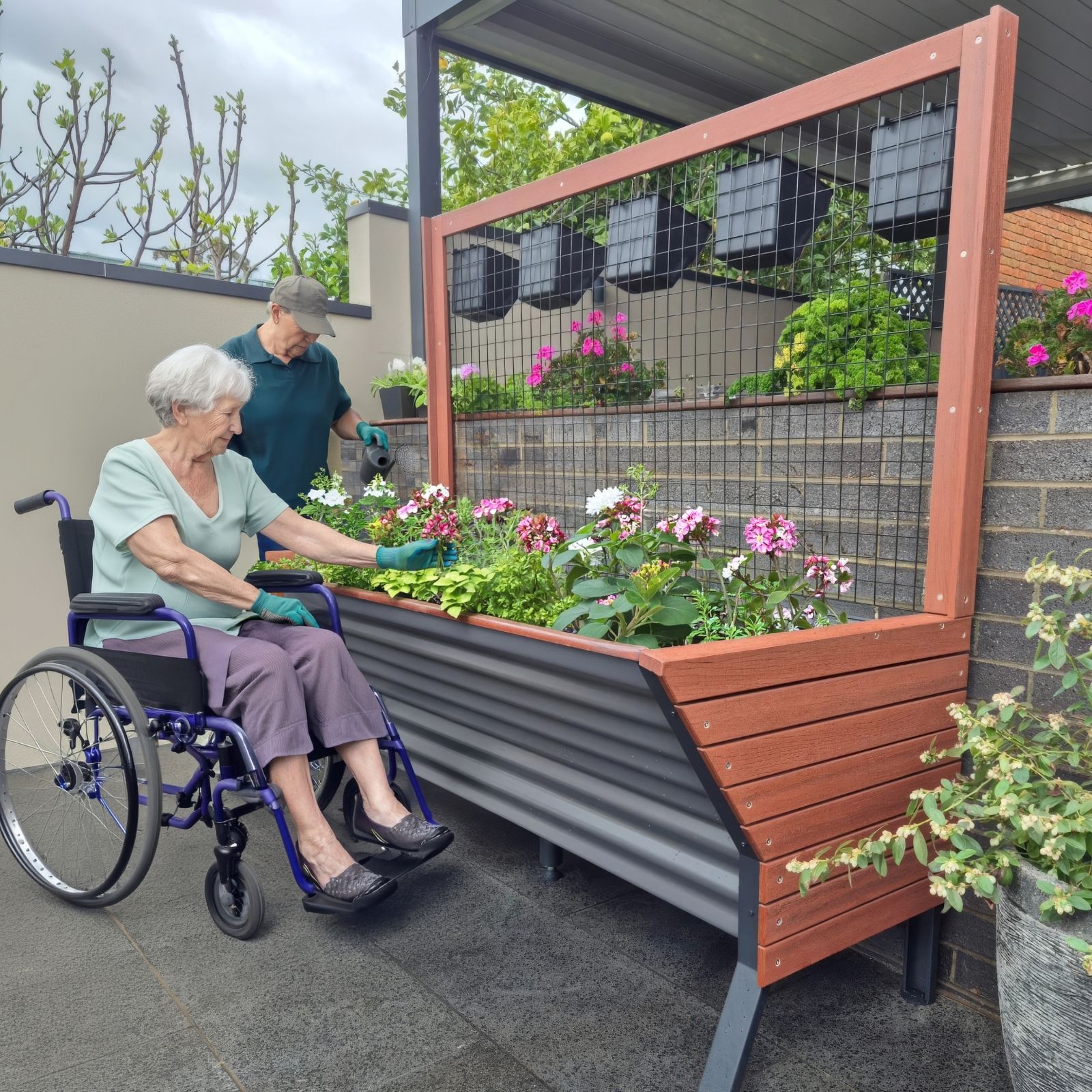

Designing for people living with dementia isn’t about “nice” interiors — it’s about enabling independence, reducing falls and simplifying infection control. Australia now has national guidance for residential aged care design (the National Aged Care Design Principles and Guidelines, developed with Dementia Training Australia) that emphasises environments which are familiar, legible, safe and easy to clean. Furniture choices sit right at the centre of that.
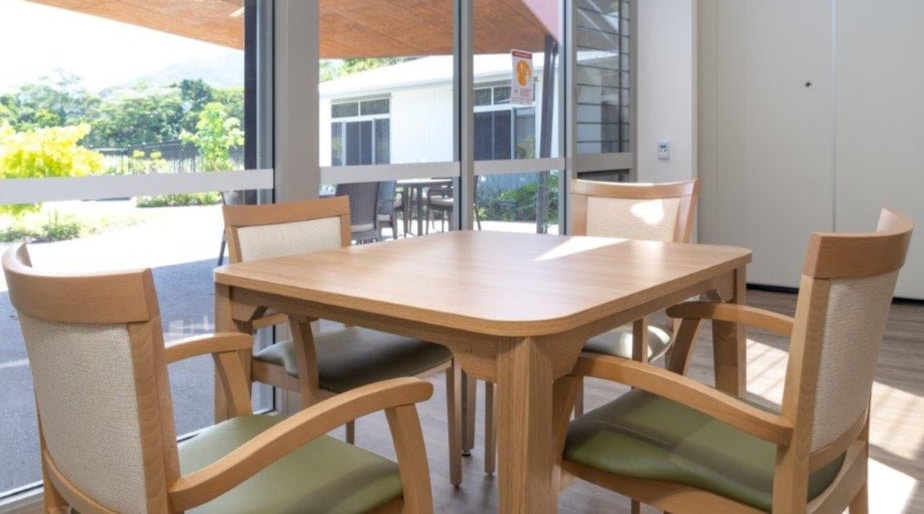
State guidance (e.g. Health Victoria) echoes this for furniture specifically: chairs and tables must be stable and free of sharp edges; dining chairs should have arms that fit under tables; fabrics must be serviceable; and furniture should help people get up and down independently.
Specifically, dementia-friendly furniture should be:
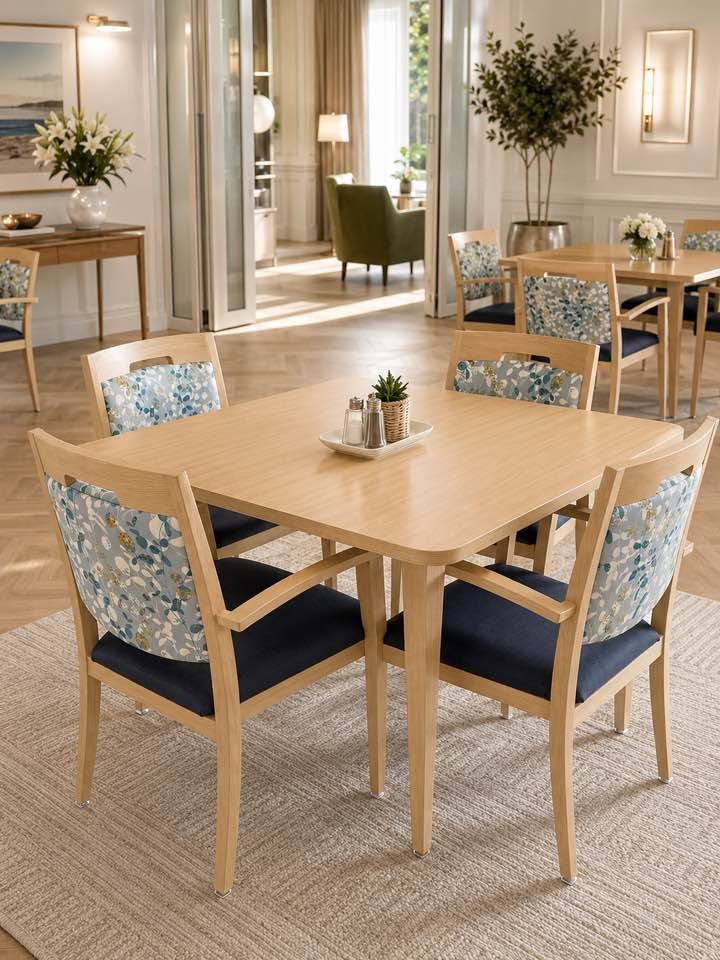
Arms are non-negotiable. Armrests provide the leverage and feedback needed for safer sit-to-stand, especially where balance, motor planning and strength are affected by dementia.
Seat height around 500 mm. Retail lounge chairs often sit at 430–460 mm, which is too low for older adults and increases effort and falls risk. Access guidance allows raising preferred seat height up to 520 mm where many users are elderly; Wentworth typically targets ~480–520 mm so feet plant, hips stay above knees and standing is easier.
Right proportions. Australian aged care research found many lounge chairs were too deep for older women (480–530 mm observed vs a recommended ~440 mm), undermining posture and transfers. Wentworth specs are set to aged-care anthropometrics, not domestic proportions.
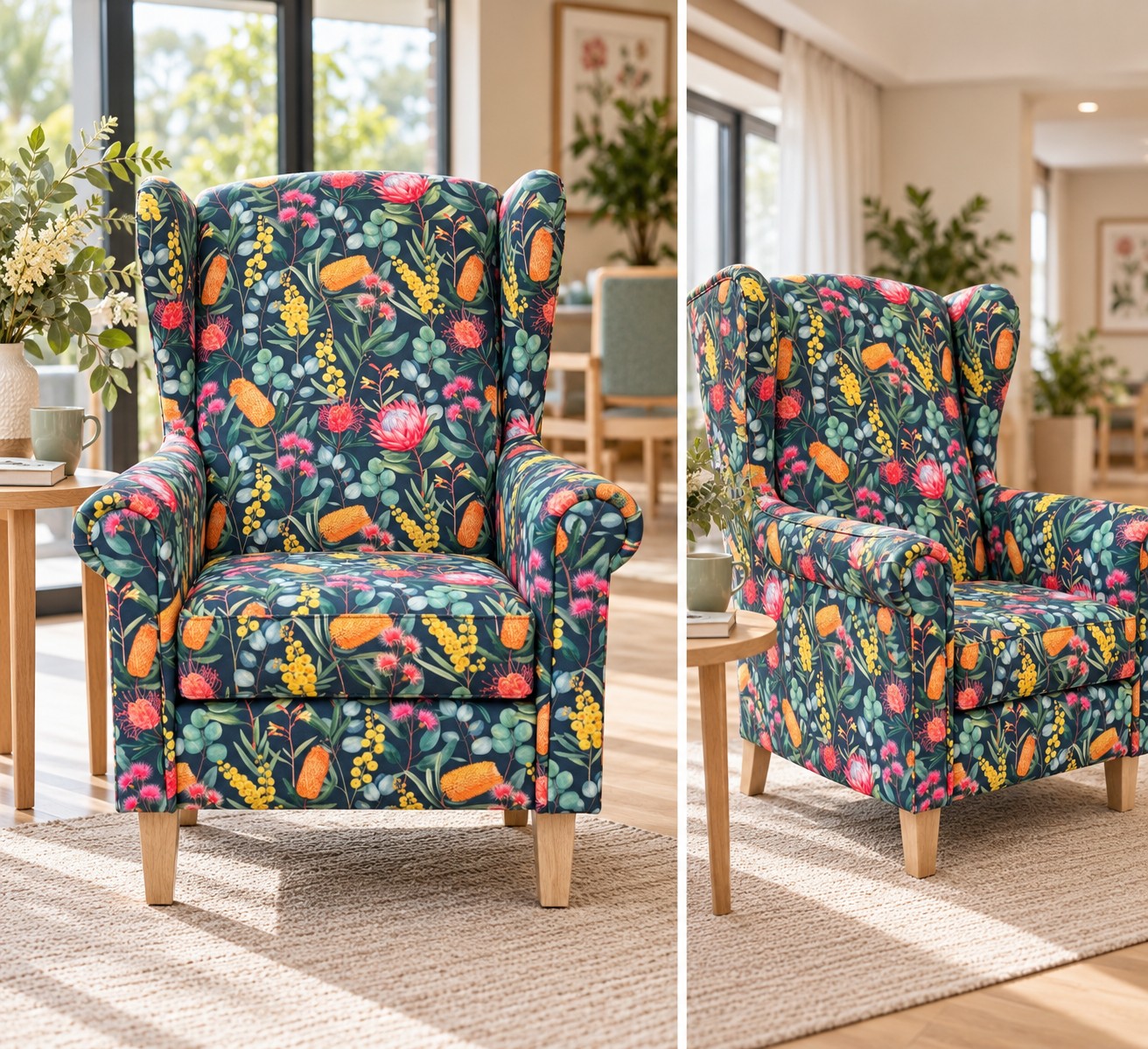
Bleach-cleanable, antimicrobial and vinyl options. In shared, dementia or higher-acuity areas, finishes must withstand frequent disinfection and body-fluid clean-ups. Retail textiles often pill, stain or degrade under hospital-grade cleaning. Wentworth sources healthcare-grade textiles (including vinyl) specified for wipe-down routines.
Fire performance. Facility upholstery commonly references AS/NZS 1530.3 fire indices. Retail fabrics rarely carry this evidence; Wentworth can supply documentation for compliant textiles from Materialised, Warwick, Zepel and Wortley.
Serviceability. State guidance calls for “good-looking, serviceable fabric.” Wentworth prioritises high-abrasion textiles, moisture barriers and zipped/replaceable cushions.
There’s no single “Australian Standard for dementia furniture.” However, providers commonly require commercial (not domestic) strength and stability — chairs can be specified and/or AFRDI-certified against AS/NZS 4688 (fixed-height chairs: strength, durability, stability). Retail pieces typically aren’t tested to these levels. The National Aged Care Design Principles and Guidelines (June 2024) aren’t a product standard, but they’re government-endorsed guidance that shapes procurement and design briefs.
Retail furniture simply isn’t designed for daily bleach or hospital-grade cleaning. Dementia-friendly specification balances dignity and independence with practical maintainability.
Wentworth Care Furniture specifies dementia-friendly seating, dining and bedroom furniture to these principles. To discuss a project or request fire/strength documentation, call 03 9408 9710 or email info@wentworthcare.com.au.
Sources: Dept of Health National Aged Care Design Principles & Guidelines; Dementia Australia; Health.Vic dementia-friendly furniture guidance; AS/NZS 4688 and AS/NZS 1530.3.
Dementia-friendly furniture is stable, supportive and free of sharp edges, with chair arms for safe sit-to-stand, the right seat height (around 480–520 mm), clear visual contrast for depth perception, low-glare and easy-clean fabrics, and a home-like look.
There’s no single standard for “dementia furniture.” Providers commonly require commercial-grade strength and stability (e.g. AFRDI certification to AS/NZS 4688) and documented fabric fire performance to AS/NZS 1530.3, guided by the National Aged Care Design Principles and Guidelines (2024).
Around 480–520 mm. This keeps the hips level with or above the knees so residents can stand with less effort — higher than typical retail chairs, which sit at 430–460 mm.
Retail furniture is usually too low, too deep, and not built for hospital-grade cleaning or commercial loads. It rarely carries fire or strength documentation, and often lacks the contrast, arms and stability that support people living with dementia.

© 2026 Wentworth Care Furniture | Website by Bsharptech
The holiday season fills up fast. Get in touch now and our team will help you plan delivery before the Christmas break. Fill out the form below or call 03 9408 9710. You can also browse furniture available pre-Christmas.