
We talk to a lot of people choosing a bed for their home — often for an elderly parent, or a loved one returning from hospital. Usually they feel overwhelmed by advice from doctors, nurses, specialists, occupational therapists, social workers and family. We can’t tell you exactly which bed is right for you, but we can make the decision easier by explaining the three main types and who they suit.
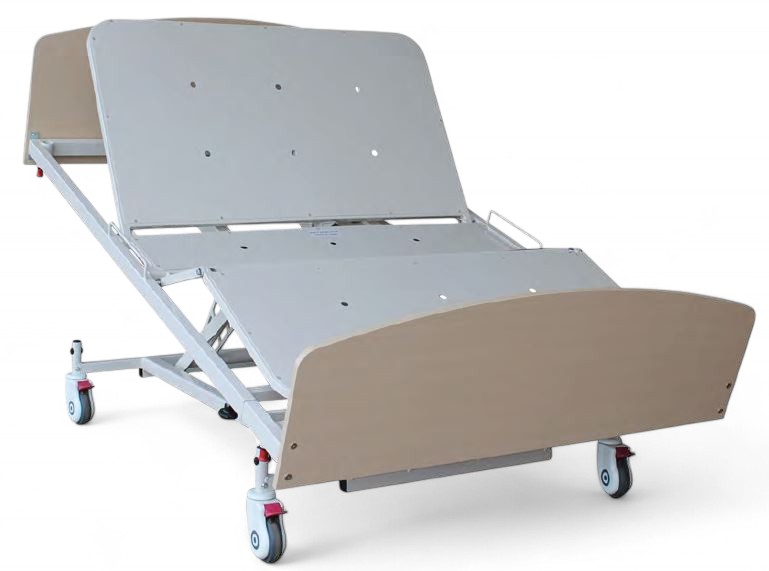
The three main types of beds are: Adjustable beds, Hi-Lo beds, and Lo-Lo beds.
| Bed type | Best for | Key feature | Typical sizes |
|---|---|---|---|
| Adjustable bed | Comfort and minor health needs | Raises head and feet, but does not raise/lower as a whole | King Single to King (Queen/King often “split”) |
| Hi-Lo bed (hospital bed) | People receiving care, or who need help getting in and out | Whole bed raises and lowers; back rest and knee lift; some offer Trendelenburg tilt | Single up to Companion (Queen/King) |
| Lo-Lo bed (floor / floorline bed) | People at risk of falling out of bed, including those with dementia or significant agitation | Same as Hi-Lo but lowers much closer to the floor to reduce fall injuries | Usually Single and King Single |
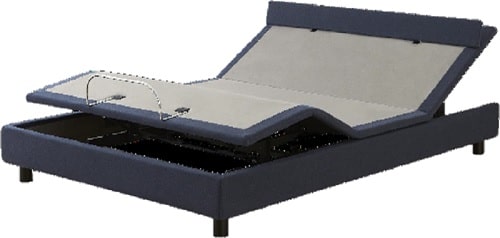
These are primarily for comfort and/or minor health conditions, where the person benefits from sitting up or having a raised head and feet. They don’t move up and down as a whole bed.
The key features are the back rest and leg lift, which can offer comfort and relief from some conditions. Some people find that slightly elevating the legs reduces pressure on the back. Some adjustable beds offer a “zero gravity” position, where the legs and head sit slightly above the heart and stomach — described as relieving the body from the pressure of its own weight. Reported benefits include reduced back pain, reduced snoring and improved breathing, better circulation and digestion, reduced swelling, and general comfort.
They’re usually available from King Single to King. Queen and King are often “split”, so each person can control their own back and leg lift independently. Many people simply choose them for the comfort of reading or watching TV in bed.
(More on our adjustable beds: adjustable beds)
Hi-Lo beds raise and lower, so the bed can be set low for the person to get in and out easily, or raised to a comfortable working height for carers and nursing staff. Most also have a back rest and knee lift for comfort and medical positioning, controlled by a handset (in aged care and hospital settings this is sometimes on the foot panel too).
Some Hi-Lo beds offer Trendelenburg and reverse Trendelenburg, where the whole bed tips forward or backward. These positions can help blood flow and may be recommended by a health professional — Trendelenburg is widely used for respiratory issues, as raised legs help improve circulation. When a bed can tip forward, it can also be set to a seated position, which is both comfortable and practical.
Queen and King Hi-Lo beds are called Companion beds, because they let a couple keep sharing a bed.
(More on Hi-Lo and Lo-Lo beds: Hi-Lo and Lo-Lo beds)
These are essentially the same as a Hi-Lo bed, but in their lowest position they sit much closer to the floor. The reason is safety: if a person is at risk of falling out of bed, they’re far less likely to be injured falling from a low bed than from standard height. People with dementia or significant agitation often benefit from a Lo-Lo bed. They usually offer the same back rest and knee lift functions, and some include Trendelenburg positioning.
Sizes are generally Single and King Single, with a few suppliers offering Double, Queen and King.
(More on Hi-Lo and Lo-Lo beds: Hi-Lo and Lo-Lo beds)
Many people moving into these beds are coming from a double, queen or king they’ve slept in for most of their adult life. Dropping to a single can feel confronting and uncomfortable, and can even increase falls as the person adjusts to a smaller bed. If you have the space and budget, consider a king single or larger.
Also think about nursing care: if a professional will provide care (at home or in a facility), they often can’t safely nurse someone in a queen bed. It’s worth checking with your service provider before you buy.
Safety rails are available, but their use is debated. Traditionally they prevented people rolling out of bed — but some people climb over them and fall from a greater height, and they’re increasingly viewed as a “restraint”, so many facilities avoid them. This is a decision best discussed with your health professional and family/caregivers, weighing the risks against the benefits. (Helpful guidance: Safer Care Victoria and SESLHD both publish information on the use of bed rails.)
If you’d like help choosing, call our team on 03 9408 9710 or email info@wentworthcare.com.au.
Both raise and lower. A Lo-Lo (floorline) bed goes much closer to the floor in its lowest position, which reduces injury if someone falls out — making it popular for residents with dementia or a high falls risk. A Hi-Lo bed doesn’t go as low but raises to a comfortable height for carers.
The low setting reduces the risk of injury if a resident falls out of bed — especially important since safety rails are now used far less. It’s a key reason Lo-Lo beds have become popular in aged care.
It depends on need. For comfort and minor health issues, an adjustable bed is often enough. If the person needs help in and out of bed or is receiving nursing care, a Hi-Lo bed is usually better. If falls are a concern, consider a Lo-Lo bed.
Yes — Queen and King Hi-Lo “Companion” beds are designed so couples can keep sharing a bed.
If space and budget allow, a King Single or larger is often more comfortable than a single, especially for someone used to a bigger bed. Check with your care provider too, as nursing care can be difficult in a queen bed.

© 2026 Wentworth Care Furniture | Website by Bsharptech
The holiday season fills up fast. Get in touch now and our team will help you plan delivery before the Christmas break. Fill out the form below or call 03 9408 9710. You can also browse furniture available pre-Christmas.